
NBFS is a small independent discovery surface for Shopify apps that are not Built for Shopify yet.
The product starts from a simple problem: good apps can sit below the visible ranking surface for a long time. A low review count can mean risk. It can also mean the app is early, narrow, or solving a merchant problem before the market has noticed. NBFS is built for that second look.
It is not a certification system. It does not sell ranking placement. It collects public facts, keeps the rules visible, and gives under-ranked Shopify apps a place to be inspected before popularity becomes the only filter.
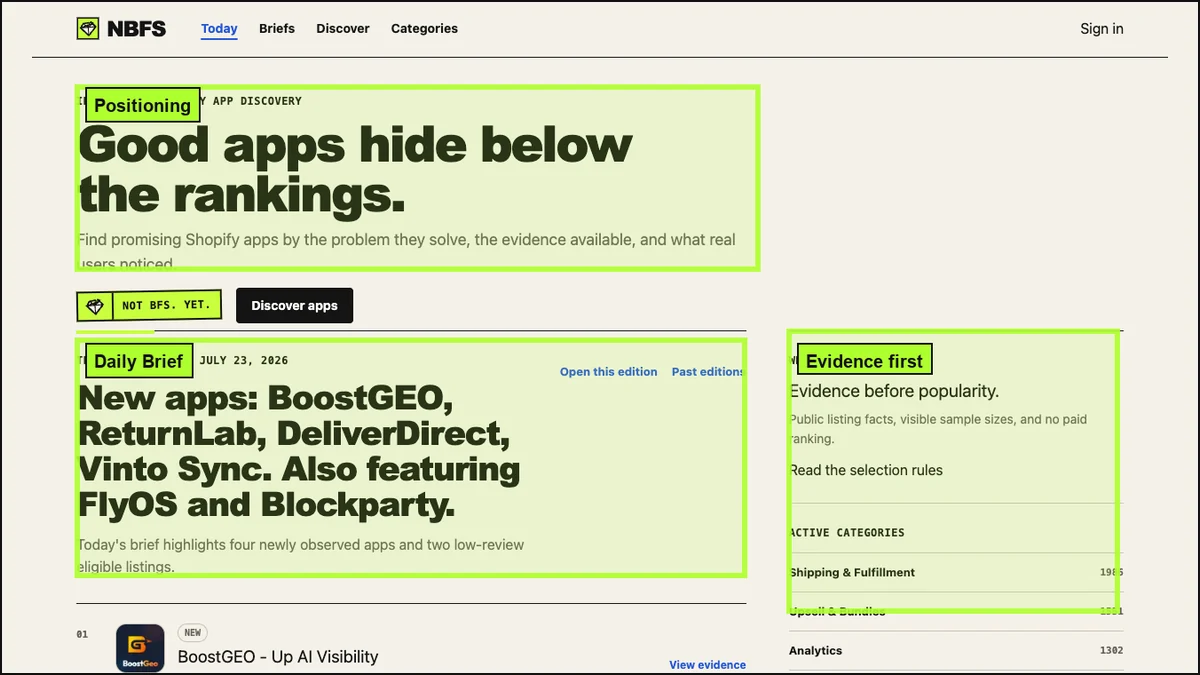
The homepage sets the frame: evidence before popularity, with daily discovery snapshots and a plain route into the app index.
The lane is intentionally narrow
NBFS only makes sense if the boundary is clear. The current lane is for public, installable Shopify apps that are eligible, not Built for Shopify at the time NBFS checks them, and specific enough to explain a merchant problem.
That excludes a lot of noise: spam, clones, misleading listings, abandoned apps, platform-owned apps, and already established large apps. The target is not every app. The target is the part of the marketplace where a useful product can be easy to miss.
The most important product rule is boring on purpose: popularity never changes the order. Review count and rating are still visible, but they do not silently become the ranking engine.
Discover is the work surface
The Discover page is where the service becomes useful as a tool. It lets a merchant, developer, or operator search by app name, problem, or category, then filter by category, price, status, and sort order.
Each result card stays plain. It shows the app name, category, pricing signal, status, review sample-size hints, evaluation count, discussion count, and a link to the evidence page. The job is not to make one app look inevitable. The job is to make the problem space scannable.
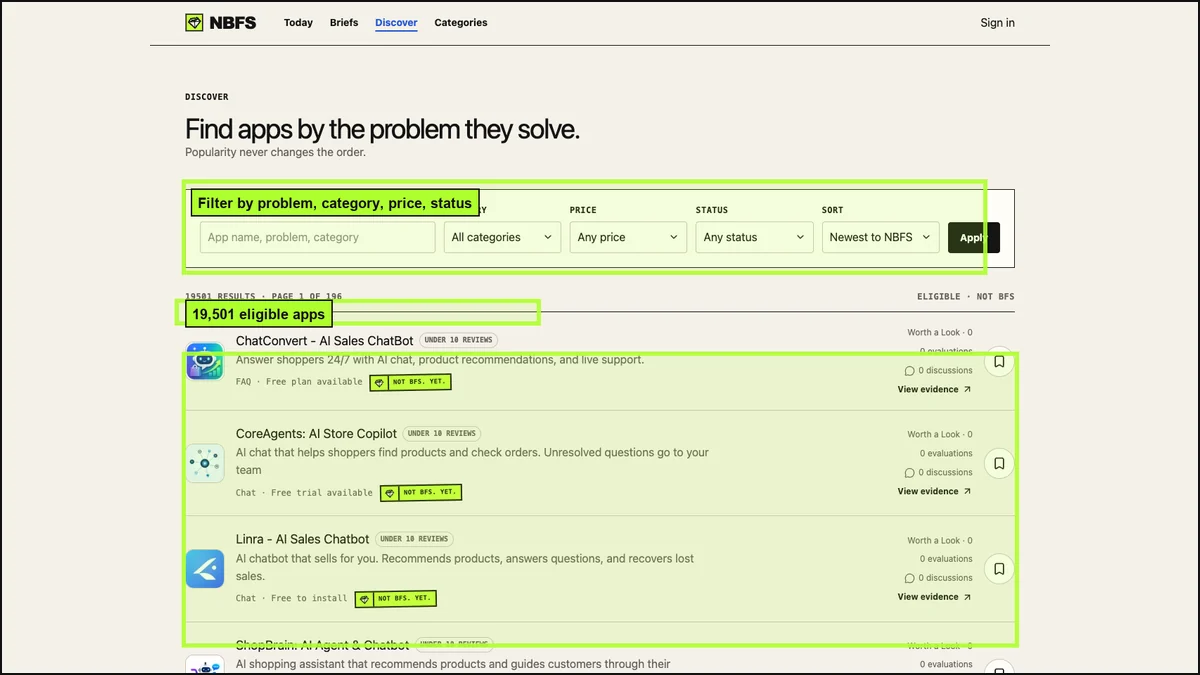
Discover keeps the index searchable without turning popularity into the hidden sort order.
App pages separate facts from judgment
Each app has a detail page where source facts and contribution layers meet.
The page records whether the app is currently eligible and Not BFS, when NBFS first saw it, when the listing was last checked, what the official listing says, which categories and pricing signals were collected, and who the developer is. Those fields are deliberately separate from user evaluations, discussions, maker notes, and editorial copy.
The signature artifact is the small embeddable status badge. A developer can point merchants back to NBFS without turning the badge into a paid ranking mark.

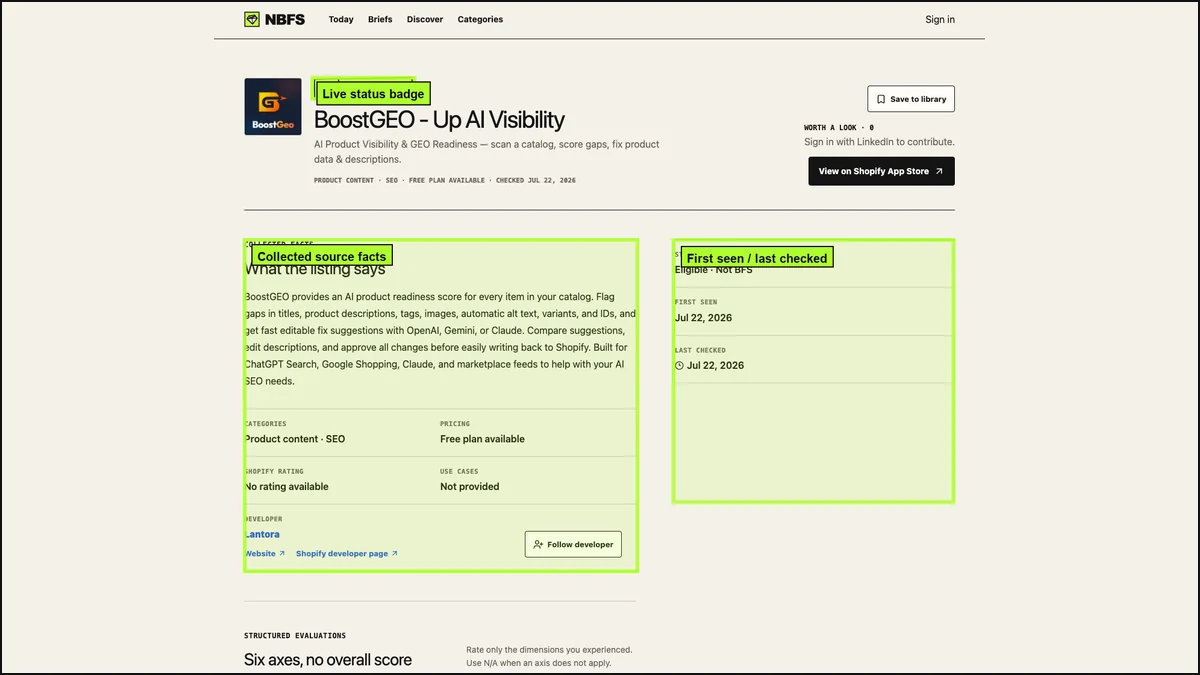
The app page treats public listing facts as the base layer, then keeps evaluation and discussion separate from that source record.
The evaluation model also avoids a single overall score. If someone has used the app, they can evaluate only the dimensions they actually experienced: setup, UX/UI, listing accuracy, reliability, support, and value for money. A single number would flatten too much.
Daily Briefs are persisted snapshots
The homepage includes a Daily Brief. Each edition is a persisted editorial snapshot, not just a feed that disappears.
The copy can be AI-assisted from public listing facts, but the model does not choose, add, remove, reorder, or rank candidates. The application code controls the candidate set and validates the output. That boundary matters: models can help turn stored evidence into readable text, but they should not quietly invent the discovery result.
Field Notes only publish when there is enough signal
Weekly Field Notes are intentionally not forced. The first issue is still gathering evidence, and NBFS only publishes an observation when there are at least three distinct source-backed signals available.
That empty state is part of the product. If there is not enough to say, the correct output is silence, not filler.
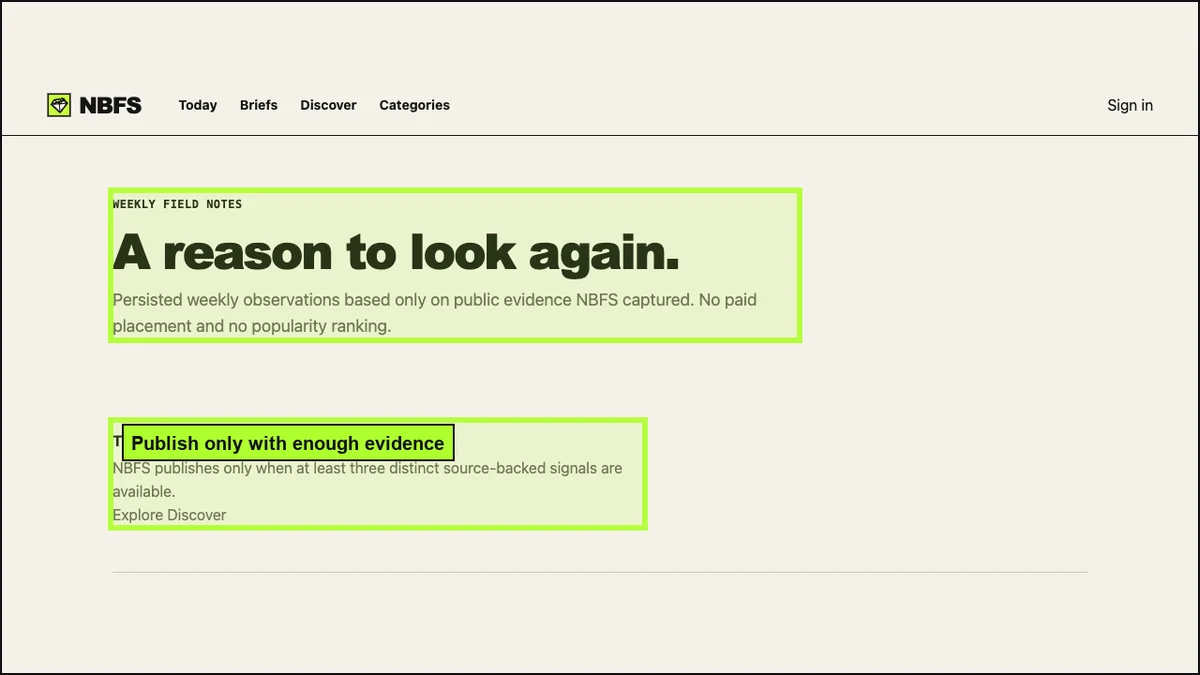
Field Notes are allowed to stay quiet until the evidence threshold is met.
Live now
NBFS is live at nbfs.app. The first version is deliberately small: collect public facts, expose the selection rules, make the index searchable, and keep editorial layers separate from source evidence.
The work from here is operational. Keep checking listings. Keep the rules visible. Let developers add context without letting it overwrite the source record. Give merchants a better second-pass discovery layer for apps that are not famous yet.
Open NBFS → Read the launch article →